On this page
What does an AC tune-up actually do?
An AC tune-up cleans the parts that collect dirt, tests the parts that wear out, and checks that the system is cooling the way it should. Done once a year, ideally in spring, it catches small problems such as a weak capacitor or a partly blocked drain before they turn into a breakdown.
In western Washington, air conditioners sit idle for most of the year and then work hard for a few hot weeks. Dust, pollen and the fluff from nearby trees build up on the outdoor coil, and electrical parts age whether the system runs or not. A spring check is the cheapest way to make sure the system starts reliably when the first warm spell arrives.
This page covers what a proper tune-up includes, when to book, what you can handle yourself, and how maintenance relates to warranties. If your system is already failing, start with the AC repair page instead.
What should a complete AC tune-up include?
Use this list when you book. A visit that only rinses the outdoor unit and checks the thermostat is not a full tune-up.
- Inspect or replace the air filter and check airflow at the indoor unit.
- Clean and flush the condensate drain and check the drain pan and any float switch.
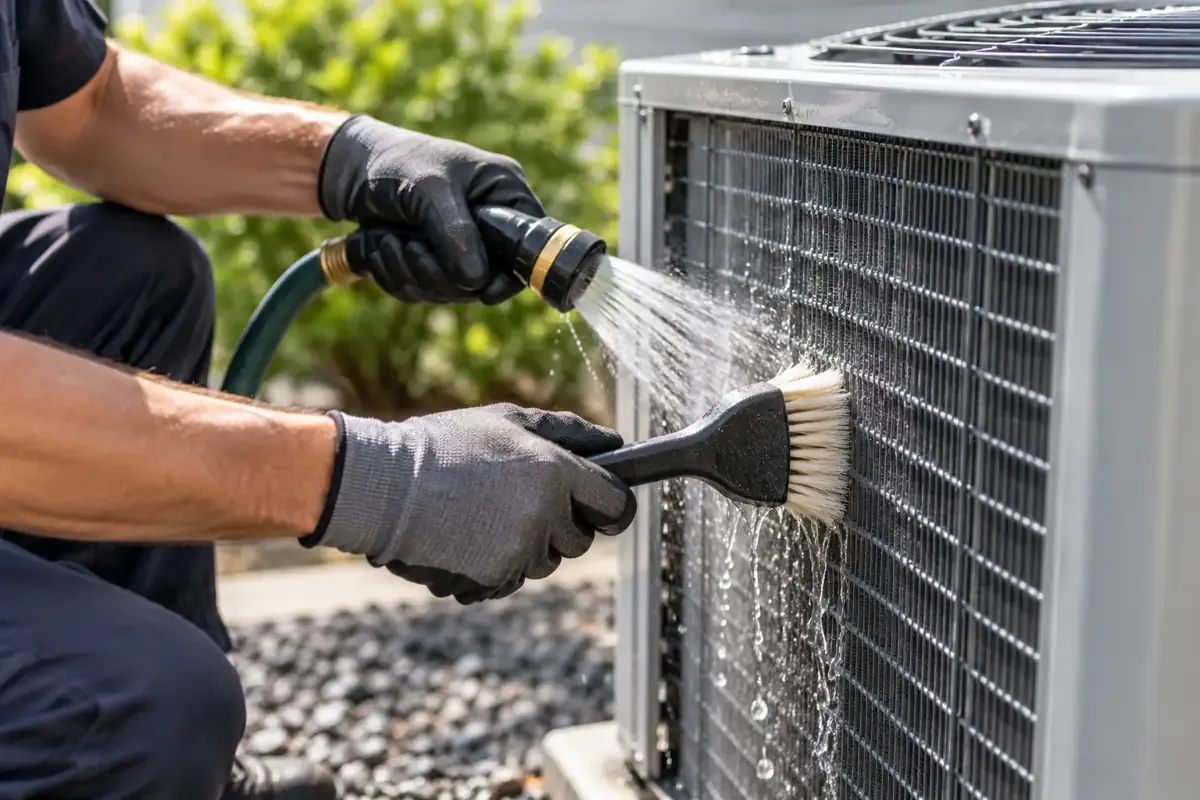
- Clean the outdoor coil and clear debris from the unit and its surroundings.
- Test the capacitor, contactor and wiring, and tighten electrical connections.
- Check refrigerant operation by measuring pressures and temperatures, without topping up unless a leak is found and discussed.
- Measure the temperature split between return and supply air.
- Check fan motors and blower for noise, wear and correct speed.
- Give you a written summary of findings and anything that needs attention.
When is the best time to schedule AC maintenance?
Spring, before the first warm week. Providers are less busy, and anything the visit uncovers can be fixed before you actually need cooling.
Once a stretch of warm weather arrives, HVAC companies in the area fill up quickly with repair calls, and a tune-up booked then may wait. If you have a heat pump, it runs all year, so it benefits from attention in both spring and fall, or at least one thorough yearly visit.
Book an extra check sooner if you notice new noises, ice on the lines, water near the indoor unit, a musty smell or a sudden rise in bills.
What maintenance can you do yourself?
The most useful homeowner job is the filter. Beyond that, keep the outdoor unit clear and leave the electrical and refrigerant work to a professional.
- Check the filter monthly during heavy use and replace or clean it when it looks gray
- Keep about two feet clear around the outdoor unit; trim plants and clear leaves in fall
- Gently rinse loose debris off the outdoor coil with a garden hose, never a pressure washer, with the power off
- Make sure supply vents and return grilles are open and unblocked
- Pour nothing into the condensate drain unless your system manual says to
Leave to a proElectrical parts inside the outdoor unit can hold a charge even when switched off, and refrigerant work requires EPA certification. If a check involves removing panels, call a technician.
Is yearly AC maintenance worth it?
For most systems, yes. The visit protects reliability, comfort and the life of the most expensive parts.
A dirty outdoor coil makes the compressor work harder and hotter, and a weak capacitor can strain the motors it starts. Both are cheap to address in a tune-up and expensive if left until they fail. Clean coils and correct airflow also help the system remove humidity, which is what makes a house feel comfortable rather than just cool.
There is a paperwork benefit too. Many equipment warranties expect the system to be maintained, so keep every service receipt in one place. If you are planning ahead for a newer system, the signs your AC needs replacing article explains what a technician will be watching for as a system ages.
Should you sign up for a maintenance plan?
A plan can be convenient if it includes a genuine tune-up each year and clear terms. Read what is covered before you commit.
Ask how many visits a year are included, whether filters are part of it, whether there are discounts on repairs, how cancellation works and whether the plan renews automatically. A good plan is simply a reminder and a fair price for a visit you would book anyway. Questions about seasonal offers are covered on the offers page, and the Lynnwood Air Comfort homepage explains how the referral works.
Does a heat pump need different maintenance than an AC?
Mostly the same checks, plus attention to the heating side, because a heat pump works all year instead of a few summer weeks.
The technician should also confirm the reversing valve switches cleanly between heating and cooling, check the defrost controls that clear frost from the outdoor coil in damp winter weather, and make sure any backup heat strips only come on when they should. A heat pump that leans on backup heat too often can quietly raise winter bills, and a seasonal check is the easiest way to catch it.
Ductless heads add one more job: cleaning the indoor coil and blower wheel inside each unit, which collect dust and moisture over time. Ask whether that is part of the visit, because some basic tune-ups only cover the outdoor unit. The heat pump guide explains how these systems work in more detail.
What should you do with the tune-up findings?
Ask for a short written summary and keep it with your other system paperwork. It becomes a useful record of how the system is ageing.
| Finding | What it usually means | Typical next step |
|---|---|---|
| Weak capacitor | It still works but is losing strength | Often replaced on the spot before it fails |
| Dirty or bent coil fins | Reduced heat transfer and higher running costs | Cleaning; fin straightening where needed |
| Partly blocked drain | Risk of water leaks or a safety shut-off | Flush and clear the line |
| Pressures outside normal range | Possible leak or airflow problem | Further testing before any refrigerant is added |
| Worn contactor or wiring | Pitted contacts or loose connections | Repair quoted in writing |
No one likes a surprise repair quote, so ask the technician to separate items that need attention now from things to watch next year. A good provider will be clear about which is which.
Maintenance questions
How often should an AC be serviced?
Once a year is a good standard, ideally in spring. Heat pumps run all year and benefit from a yearly visit as well, with some homeowners booking both spring and fall.
How long does a tune-up take?
Most take about an hour or two depending on the system, its condition and access to the outdoor unit and indoor equipment.
Does a tune-up include refrigerant?
A tune-up should check how the refrigerant circuit is operating. Adding refrigerant is only appropriate when a leak has been found and discussed, because a properly sealed system does not use it up.
Can maintenance lower my energy bills?
Clean coils, a clean filter and correct airflow help the system run as efficiently as it was designed to, which can help keep running costs steady.
Is it worth servicing a very old system?
Usually, yes, at least until you replace it. A tune-up keeps an older system as reliable as it can be and gives you an honest read on its condition, which helps you plan the replacement on your own schedule.
Does skipping maintenance void my warranty?
It can, depending on the manufacturer. Check your warranty terms and keep service receipts in case you need to show the system was maintained.
What should I do before the technician arrives?
Clear access to the outdoor unit and the indoor furnace or air handler, and note any noises, smells or comfort problems you have noticed.
Related services
Helpful guides
Calling from Bothell? See AC and HVAC services in Bothell.