Protect and recover
Floors and work areas are protected, power is shut off and refrigerant is recovered from the old system as required by federal rules.
Right-sized systems, installed and tested properly. Get your options and a written estimate from an independent local HVAC provider before any work begins.
Free referral service. Your call is connected to an independent local HVAC provider, who quotes and performs the work.
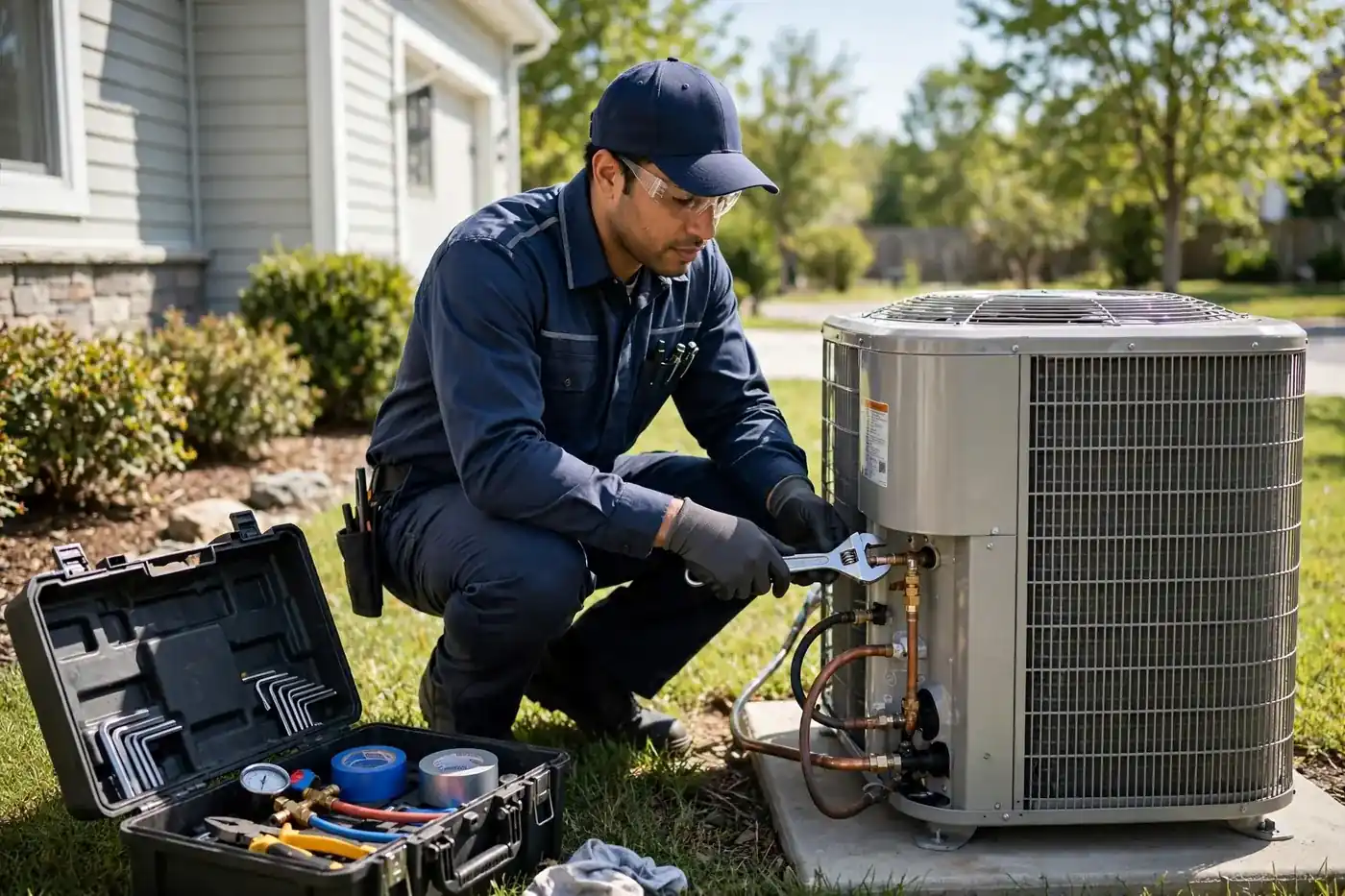
A complete AC replacement covers four things: sizing the new system to your home, choosing matched equipment, installing it to code with a permit, and testing it before handoff. If a quote skips the sizing or the testing, it is not a complete job.
Replacing an air conditioner is one of the larger home projects most people take on, and it is easy to focus on the brand name on the outdoor unit. In practice, how the system is sized and installed matters more than which logo it wears. A well-installed mid-range unit will usually outperform a premium unit that is oversized, undercharged or connected to leaky ducts.
This page explains how a good replacement works in Lynnwood homes, what to ask, and how to compare quotes. If your system has simply stopped and you are not sure it needs replacing, start with the AC repair guide instead.
Pro tipBefore you call, photograph the data plates on the outdoor unit and the furnace or air handler. Model and serial numbers reveal age, size and refrigerant type at a glance.
One sign on its own rarely decides it. Two or three together usually mean a replacement quote is worth getting.
If you are seeing these signs in spring, you are in a good position. Replacing before the first warm spell means you can compare options calmly, rather than taking the first available install date in the middle of a heat wave.
Repair a sound system with one failed part. Consider replacement when the system is older, the expensive components are failing, or the repairs are adding up.
A capacitor, contactor or thermostat is a modest repair at almost any age. A failed compressor or a leaking coil is different: those repairs can approach the cost of new equipment, and on an older system you are putting new parts into an old machine. Many technicians use a simple test: weigh the repair cost against what a replacement would cost, and factor in the age. The older the system, the lower the share of a new system you should be willing to spend on one repair.
The fairest approach is to ask for both options in writing, side by side. A good provider will tell you when repairing is the better call. If they push replacement without testing anything, that is a reason to get a second opinion. For a step-by-step way to decide, read how to decide whether to repair or replace your AC.
Size should come from a load calculation, not a rule of thumb or the size of the old unit. The industry standard method is often called a Manual J calculation.
The calculation looks at the floor area, insulation levels, window size and direction, air leakage, the number of occupants and where the ducts run. Two houses with the same square footage can need very different capacities. A split-level with big west-facing windows will need more cooling than a shaded rambler of the same size.
An oversized system cools the air quickly and shuts off before it has removed much humidity, which leaves the house feeling cool but clammy. It also turns on and off more often, which wears parts faster and wastes energy. An undersized system runs nonstop on the hottest days and may never reach the set temperature. Proper sizing avoids both.
Watch outIf a quote simply matches the old unit's size, ask how it was calculated. The original system may have been the wrong size from day one.
Most Lynnwood replacements come down to three options: a central air conditioner paired with your furnace, a heat pump that both heats and cools, or a ductless mini-split system.
If your furnace is fairly new and your ducts are in good shape, a matched central AC is often the simplest choice. If your furnace is also aging, a heat pump installation can replace both functions with one outdoor unit, which suits the mild, damp winters here. Homes without ducts, or with additions and upstairs rooms that never cool, are often better served by ductless mini-splits.
Cooling efficiency is rated in SEER2, and heat pump heating efficiency in HSPF2. Higher ratings lower running costs, especially if you use the system a lot. Newer equipment has moved to lower-impact refrigerants, so ask which one your new system uses, whether the existing line set is compatible, and whether the indoor coil needs to be replaced to match.
Variable-speed and two-stage systems run at lower output most of the time, which tends to mean steadier temperatures, better humidity control and quieter operation. They cost more upfront, so ask the provider whether the comfort difference is worth it for your home.
A typical install follows a set sequence, and a professional crew will explain each step before starting.
Floors and work areas are protected, power is shut off and refrigerant is recovered from the old system as required by federal rules.
The old equipment is removed. The new outdoor unit goes on a level pad or bracket and the indoor coil is installed.
Lines are brazed, pressure tested and evacuated with a vacuum pump. Wiring, drain and disconnect are completed.
Refrigerant charge, airflow, electrical draw and temperature split are checked against the manufacturer's specifications.
At the end you should get a walkthrough of the thermostat and filter, the warranty paperwork and an explanation of the permit inspection. Many straightforward replacements finish in a day; jobs with duct or electrical changes take longer. Ask for a timeline with your estimate, and see how long AC replacement takes from first quote to final check.
Usually, yes. Replacing heating and cooling equipment typically needs a mechanical permit, and electrical work may need a separate electrical permit. Requirements depend on the city, so ask the provider who pulls the permit and when the inspection is scheduled.
Permits protect you. An inspection confirms the electrical connections, clearances and installation meet code, and a permitted job is easier to document when you sell your home. Be cautious of any quote that suggests skipping the permit to save money.
Each independent provider sets its own pricing, so we do not publish prices. These are the factors that drive the number on a written estimate.
| Factor | What it changes |
|---|---|
| Capacity and type | Set by the load calculation. Central AC, heat pump and ductless jobs are priced differently. |
| Efficiency | Higher SEER2 equipment typically costs more upfront and less to run. |
| Indoor coil and furnace | Whether the indoor coil is replaced and whether the furnace blower suits the new system. |
| Ducts | Sealing, resizing or adding returns where airflow is poor. |
| Electrical | A new circuit, disconnect or panel capacity if the home needs it. |
| Line set and placement | Reusing or replacing lines, moving the outdoor unit, a new pad or bracket. |
| Permits and add-ons | Permit fees, thermostat, filtration, condensate pump or surge protection. |
Utility rebates for qualifying heat pumps are sometimes available through local programs, and some providers offer financing. Terms change, so confirm current details directly with the program. The AC replacement cost guide goes deeper on what moves the price.
Line them up on the same terms. A lower price that leaves out the coil, permit or duct work is not actually cheaper.
If you are also weighing a yearly service plan after the install, the AC maintenance guide explains what a tune-up should include, and the AC sizing guide explains how to check the capacity on each quote.
Sometimes, but it is often a false saving. The outdoor condenser and indoor coil are designed to work as a matched pair, and newer refrigerants may not suit an older coil. Ask the provider whether a matched system is required for the efficiency rating and the warranty.
It depends on their size, condition and the refrigerant the new system uses. Some line sets can be flushed and reused; others are better replaced, especially if they are undersized, damaged or run through a finished space that is easy to access now.
Not by itself. Hot upper floors usually come from duct design, attic heat and air leakage. A provider may suggest duct changes, a zoning setup or a ductless head for that floor alongside the new system.
Usually for the start and the walkthrough at the end, so you can approve the equipment location and learn the thermostat. Ask the provider what access they need to the attic, crawlspace and electrical panel.
Change or clean the filter on schedule, keep plants and debris clear of the outdoor unit, and book a yearly tune-up. Keep the installation paperwork, since some warranties expect proof of maintenance.
The Washington State Department of Labor & Industries offers an online lookup for contractor registration, bonding and insurance. Ask the provider for their registration number and check it before signing.
Calling from Bothell? See AC and HVAC services in Bothell.
Call to talk through sizing and timing with an independent HVAC provider serving Lynnwood.
(425) 592-3234Free referral service. Your call is connected to an independent local HVAC provider, who quotes and performs the work.